5% Off on French Drain Installs This Month
Foam Injection
Settling concrete creates safety hazards and structural instability across residential and commercial properties. Oklahoma’s clay-rich soils expand and contract with seasonal moisture changes, forming voids beneath slabs that cause driveways, patios, and walkways to sink and crack. Foam injection addresses these issues by filling voids and lifting concrete back to grade without demolition or extensive excavation. The lightweight polyurethane formula expands beneath the surface, compacting loose soil and restoring stability in a matter of hours. Unlike traditional methods, foam injection cures rapidly and allows immediate use of treated areas.
This approach works particularly well in Ada, where soil movement challenges conventional repair techniques. The material resists moisture absorption and maintains its structural integrity through freeze-thaw cycles and seasonal ground shifts. Application requires only small drill holes, preserving landscaping and minimizing cleanup. Properties with uneven outdoor surfaces or settling foundations benefit from foam injection that delivers long-term stability without the cost or downtime of slab replacement. The process is precise, efficient, and designed to withstand the unique environmental conditions found throughout the region.
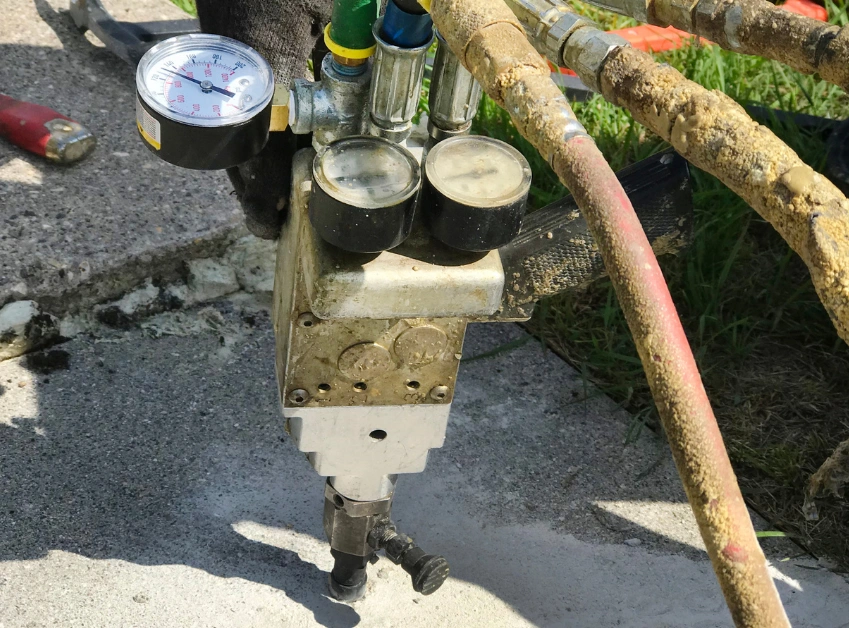
Settling slabs and unstable foundations undermine the safety and value of your property. When voids form beneath concrete surfaces, the weight of the structure accelerates shifting, creating uneven walkways, tilted patios, and cracked driveways. In Ada, the combination of expansive clay soils and seasonal moisture fluctuations makes this problem particularly persistent. Traditional repair approaches involve tearing out and replacing entire sections, which requires significant time, cost, and disruption to your operations or daily life.
Polyurethane injection provides a targeted alternative. The material is introduced beneath the affected surface through small, strategically placed drill holes. As it expands, it fills voids, compacts loose soil, and lifts the concrete back to its original elevation. The process is controlled and precise, allowing technicians to monitor lift in real time and achieve accurate leveling. Because the foam cures within minutes, treated areas are ready for foot and vehicle traffic almost immediately after application. This eliminates the extended downtime associated with traditional methods and allows you to resume normal use of the space without delay.
The lightweight nature of the foam is a critical advantage in environments where soil bearing capacity is already compromised. Unlike dense grout or mud, polyurethane does not add substantial weight that could trigger further settling. The material resists moisture infiltration and maintains its density through freeze-thaw cycles, ensuring long-term stability even as ground conditions shift with the seasons. Properties throughout Ada benefit from this approach because it addresses both the immediate symptom of settling and the underlying void formation that causes it.
Applications range from residential driveways and garage floors to commercial warehouse slabs and parking structures. Each project is assessed individually to determine the extent of void formation, the appropriate foam density, and the injection pattern required to achieve stable, level results. This method delivers structural stability without the cost, mess, or disruption of demolition and replacement, making it a practical solution for property owners seeking durable, efficient results.

Protect your home with efficient foundation and drainage services. Start with a free estimate.
Most foam injection projects can be completed within a few hours to a full day, depending on the size of the area requiring treatment. Smaller residential applications, such as filling voids beneath a concrete slab or stabilizing a section of sidewalk, often take two to four hours. Larger commercial projects or extensive foundation repairs may require a full day or longer. The process itself is efficient because the foam expands quickly and cures rapidly, allowing you to use the treated surface within 15 to 30 minutes after application. Weather conditions in Ada, including temperature and humidity, can influence curing times slightly, but the material is designed to perform reliably across a range of conditions.
The process begins with a thorough assessment of the site to identify voids, settling, or structural weaknesses. Small holes, typically less than an inch in diameter, are drilled into the affected concrete or soil. A specialized polyurethane foam is then injected through these holes using calibrated equipment. As the foam expands, it fills voids, lifts sunken slabs, and compacts loose soil beneath the surface. Technicians monitor the lift in real time to ensure precise leveling and avoid over-correction. Once the desired elevation and stabilization are achieved, the injection holes are patched with a color-matched material. The entire process is minimally invasive, producing little noise or disruption, and the treated area is ready for use almost immediately after completion.
Pricing varies based on the scope of the project, the size of the area being treated, and the extent of settling or void formation. Smaller residential repairs, such as lifting a section of a driveway or patio, typically cost between a few hundred and a couple thousand dollars. Larger projects involving foundation stabilization or commercial flooring may range higher. The cost is often significantly lower than traditional methods like mudjacking or complete slab replacement, which require more labor, materials, and time. Additionally, because the foam is lightweight and does not add stress to underlying soil, you avoid future costs related to further settling. Most providers offer free on-site evaluations and detailed quotes, allowing you to understand the investment before any work begins.
Preparation is minimal compared to other repair methods. You should clear the work area of furniture, planters, or equipment that might obstruct access to the concrete surfaces being treated. If the project involves lifting a slab near a structure, such as a porch or garage, ensure that entry points are accessible for the technicians and their equipment. There is no need to excavate, remove landscaping, or relocate heavy items unless they directly block the injection sites. The drilling and injection process generates very little mess, and because the foam cures quickly, you will not need to cordon off the area for an extended period. Most homeowners and business operators find the preparation and cleanup requirements to be straightforward and unobtrusive.
Polyurethane foam is engineered for long-term durability and resists compression, moisture, and degradation over time. Once cured, the material maintains its density and does not break down under typical soil and environmental conditions. However, if underlying issues such as ongoing water infiltration, poor drainage, or soil erosion are not addressed, new voids can form in adjacent areas. Reputable service providers assess the root cause during the initial evaluation and recommend supplementary measures, such as drainage improvements or soil stabilization, to prevent recurrence. Many companies back their work with warranties that cover both materials and workmanship, providing recourse if the treated area settles again within a specified timeframe. Addressing the source of the problem upfront, combined with quality application, minimizes the likelihood of future issues.